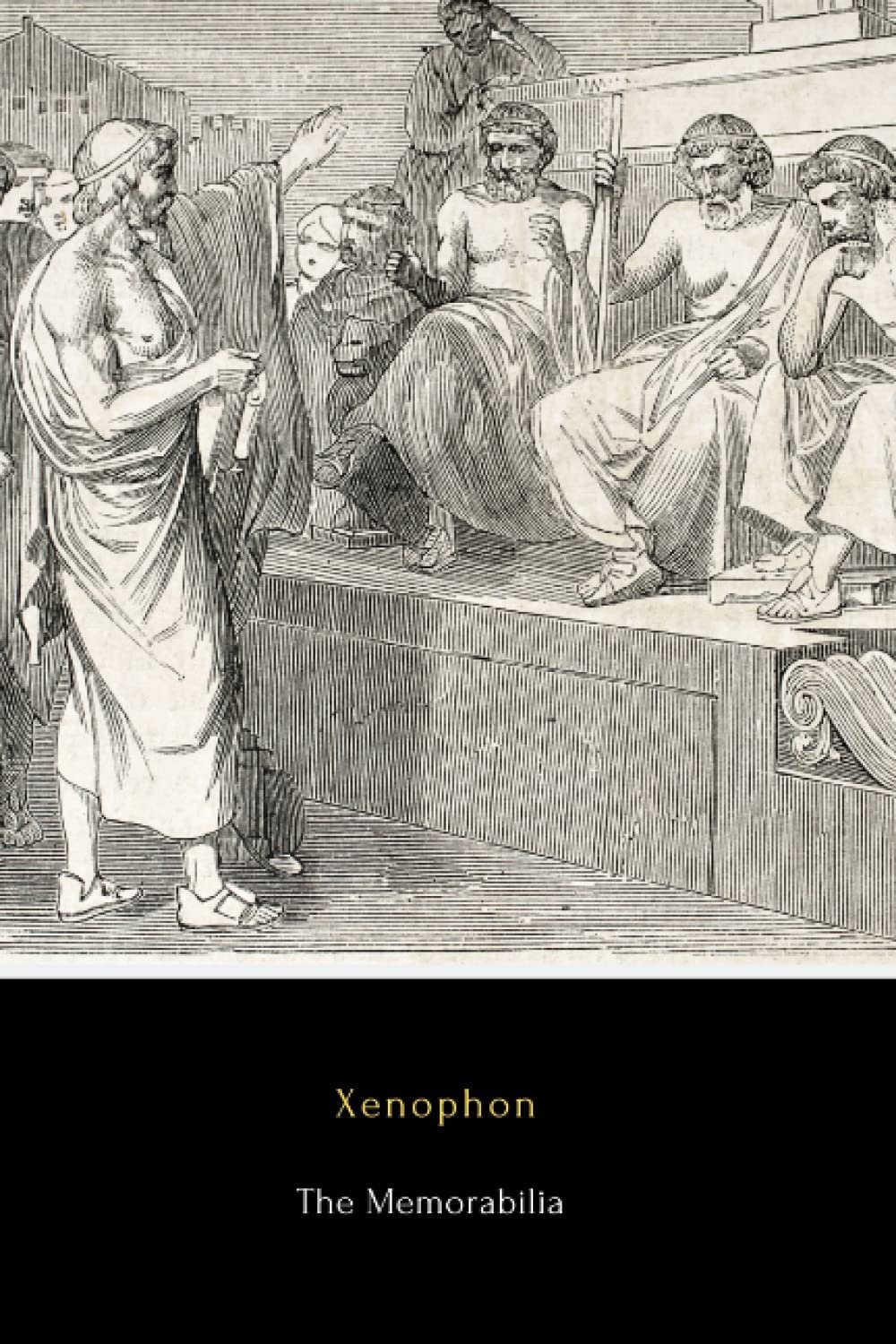
Xenophon, a philosopher and historian, was a student of Socrates and wrote “The Memorabilia” years after Socrates’ execution in 399 B.C. This collection of dialogues provides a general appreciation of Socrates’ life and ideas rather than a defense during his trial. Xenophon argues for Socrates’ innocence against charges of atheism and corrupting youth. Unlike Plato, who emphasizes Socratic philosophy, Xenophon shares more practical examples of Socrates’ conversations with others, offering a unique perspective that complements Plato’s works.
Disclaimer: This post may contain affiliate links. As an Amazon Associate, I earn from qualifying purchases.